
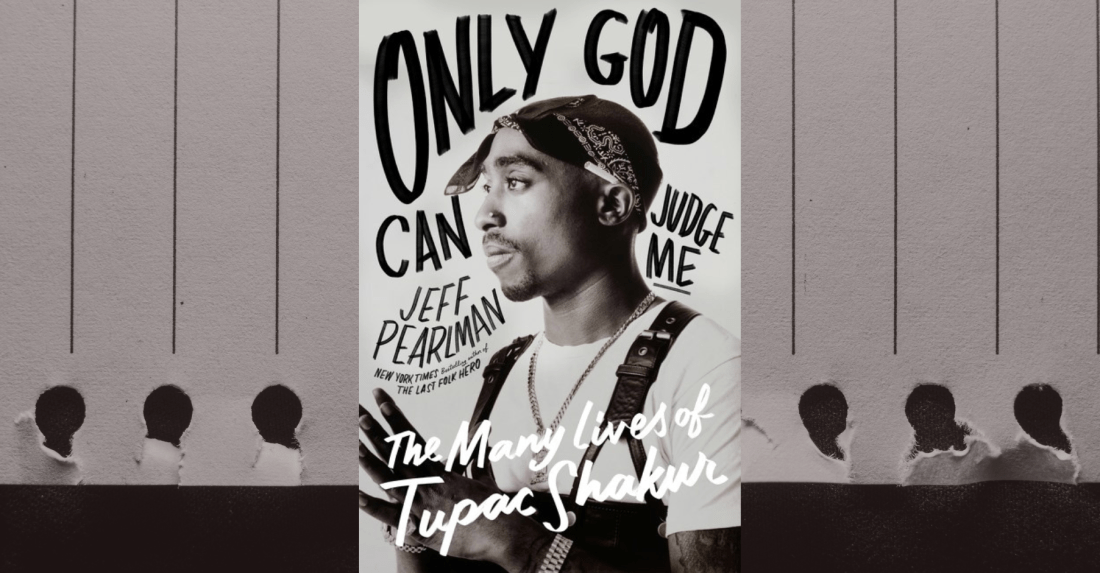
Nearly 30 years after his murder, Tupac Amaru Shakur remains an icon. Generations born decades after his death listen to his music and admire his films as if they were present for his breakthrough in the 1990s. There have been numerous theories, biographies, and tributes to Tupac but only now do we truly understand the man we rapped along with on the radio. Jeff Pearlman, an acclaimed sportswriter, steps out of his comfort zone to take readers on a journey into the life of one of the most talented rappers of all time. In his latest book, Only God Can Judge Me: The Many Lives of Tupac Shakur, Pearlman shines light on both Pac’s brilliance and his dark side. With more than 700 interviews, this biography explores all of the rapper’s relationships — those who knew Tupac intimately as well as those who merely encountered him.
Only God Can Judge Me begins with a coffee date. Pearlman manages to track down Davonn Hodge, a man who is unfortunately famous because he is the baby from “Brenda’s Got a Baby,” a song Tupac released in 1991 detailing the story of a 12-year-old girl who was raped and becomes pregnant. In the song Tupac challenges us to “do better” for our children and our society.
Brenda (whose real name is Jeanette) hides the pregnancy and, just moments after giving birth, panics and tosses the baby down the trash chute of her apartment building. While filming a movie, Tupac read about this devastating story and wrote the song to help raise awareness. Now, decades later, Pearlman sits at Starbucks with that baby. It is here we learn that Pearlman’s research (along with Tupac’s music) reunited mother and child:
They met that night in the lobby of Caesars Palace. For Devonn, the kisses felt like home.
“After they found you in the garbage, they found me,” she [Jeanette] explained. “They took me to the hospital and let me hold you.”
Pearlman’s book is not simply a recounting of Tupac’s life or a surface biography. Instead, his narrative takes us deep into Tupac’s journey. As readers, we walk with Pearlman down the Baltimore streets where Tupac attended the Baltimore School for The Arts. We are devastated by the haunting poverty and his unstable childhood, and saddened by the drug addiction Tupac’s mother (Afeni) struggled with despite her being part of one of the most legendary movements in history: The Black Panther 21.
This biography is human, nostalgic, and evocative. Pearlman exposes the man behind the “thug life” image and brings light to the stories told in Tupac’s lyrics. There are numerous accounts that both admire and condemn Tupac — from Leila Steinberg’s (one of Tupac’s mentors and his first manager) memories of Tupac’s explosive response to a racial slur at a club in Cotati to Set’s (Tupac’s sister) eagerness to be a part of her brother’s life, particularly in the absence of a mother and father.
While Pearlman takes us on a scenic “Tupac ride,” he also manages to explore those close to this mysterious icon. In one chapter, Pearlman reveals the catastrophic nature of Tupac’s mother and identifies Tupac’s overall mindset:
Having been brought up by an absentee addict (“People try and paint a sympathetic portrait of Afeni,” said Eric Acker, a T.M.S. dancer. “They shouldn’t. She was a crackhead. Seventy-five percent of the time I saw her she was fucked up”), Tupac never mustered the empathy Set required. One of his biggest strengths as a rapper was his single-minded focus. It was, however, his biggest weakness as a person.
Set’s memories of Tupac are crucial to understanding who Tupac truly was. Her account of his life is less glamorous. Pearlman illuminates Set’s idolization of her brother from a very young age and showcases a loving sister who truly understood the man who ultimately sacrificed himself to it all:
“At the risk of sounding like a weirdo, I equate my brother to Jesus. Like, we’re all God’s children, but this one is special. This one makes a difference. This one rises above. There are people like Gandhi, like Muhammad, like Tupac. And the thing is, the weight for people like that is unbearable. You think you know my brother? You think you understand him? Really? My brother didn’t die happy. He died alone.”
The biography ends with Tupac’s untimely death, before he could spearhead a children’s benefit that meant a great deal to him:
“I think in those children he saw himself. He wanted them to have bright futures. He felt as if he could help spearhead that. But then he died, and it never happened. He wanted to be the change they needed.”
Pearlman’s biography haunts us with more than 400 pages of testimonies from the many who had the privilege of crossing paths with Tupac. It gives us clarity and a reminder that we are human. It’s a gateway, a journey into the past that gives life and voice to a silenced soul. We get a front row seat to Tupac’s childhood, his rise to fame, his struggles, his dark side, and his passion for change. And while not all recollections are positive, they are honest, and they confirm repeatedly that he touched many lives.
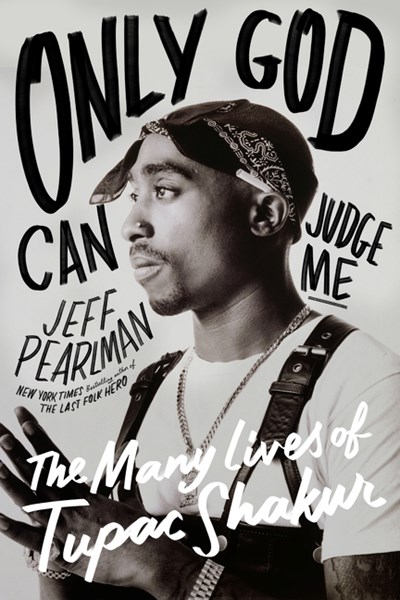
Only God Can Judge Me: The Many Lives of Tupac Shakur
By Jeff Pearlman
Mariner Books (HarperCollins Publishers LLC)
Published October 21, 2025


